Chernihiv Polytechnic National University
Dates: 01.10.2026-02.10.2026
Will be published after the conference
DOCX / ODT template
The goal is to bring academia, industry and open communities together around practical use of Free and Open Source Software (FOSS) in education, research and business. The event is hosted by Chernihiv Polytechnic National University.
Working languages: Ukrainian and English (materials may be submitted in either).
Format - online only. The connection link will be sent to registered participants by email closer to the event.
Speakers and authors of published theses receive e-certificates (indicating either a talk or a thesis publication). Submissions are selected based on thesis peer review.
Participation is free of charge.
Track topics for the 2026 edition, reflecting current directions in the FOSS ecosystem.
Registration and thesis submission deadline extended to 01.10.2026.
* Dates will be announced by the Organizing Committee. Follow updates.
Accepted theses will be published in the conference proceedings (electronic edition with ISBN). Best talks may be invited to submit extended versions to partner venues (by Program Committee decision).
The same link for both days: October 1 from 12:00 and October 2 from 10:00 (Kyiv time, UTC+3).
Meeting ID: 819 6473 5382 · Passcode: 511853
| Time | Speaker | Topic |
|---|---|---|
| 12:00 |
Volodymyr Bazylevych - Chair of the
Organizing Committee Anatolii Prystupa - Vice-Rector for Research |
Opening & welcome remarks |
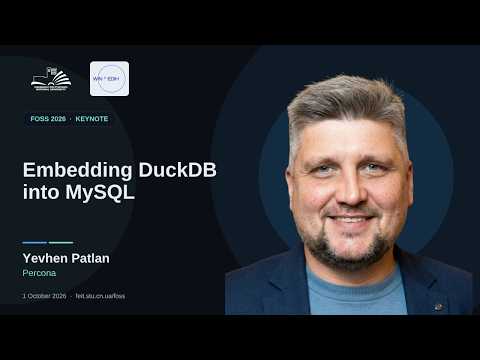
| 12:15 | Yevhen Patlan | Embedding DuckDB into MySQL |
| 12:45 | Frédéric Descamps | MariaDB Server: where the innovation happens |
| 13:30 | Sergii Shchaslyvyi | Exit virtualization lock-in, enter open source? |
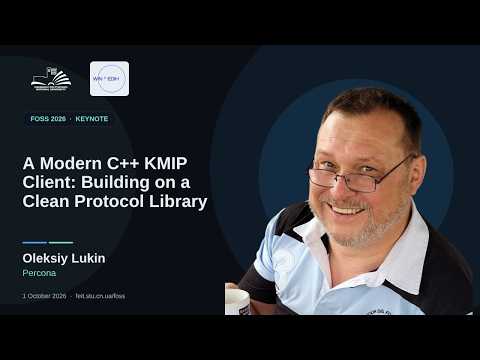
| 14:15 | Oleksiy Lukin | A Modern C++ KMIP Client: Building on a Clean Protocol Library |
| Break (15:00) | ||
| 15:45 | Vinicius Grippa | Profiling MySQL Execution Plans with myflames |
| Time | Speaker | Topic |
|---|---|---|
| 10:00 | Bohdan Nahornyi | An open browser-based co-simulator of STM32 firmware and electrical circuits |
| 10:20 | Kostiantyn Klochko | Розробка та дослідження децентралізованої вебсистеми каталогізації електронних публікацій засобами Elixir |
| 10:40 | Bohdan Velihorskyi |
Оптимізація керування Microgrid за допомогою бібліотеки
CVXPY
Download slides |
| 11:00 | Ivan Burmaka |
Local, open, and energy-efficient: harnessing x86 NPUs for
everyday AI tasks
Download slides |
| 11:20 | Victor Ebirim |
Resilient Digital Education in Disrupted Environments: The
CCDS Approach
Download slides |
| 11:40 | Khulood Hamood Mohammed Ali Al-Akwaa | Open-Source Data Science for Sustainable Development |
| Coffee break (15 min) | ||
| 12:15 | Adnan Šupić (Percona) |
Zero-Downtime Migration with Percona ClusterSync for MongoDB
Download slides |
| 12:35 | Puneet Kala (Percona) | Run MongoDB Your Way: A Practical Open-Source Stack |
| 12:55 | Fabio Silva (Percona) | Hosting Someone Else's App: Iframe Choreography in PMM |
| 13:15 | Briana Swift (Percona) | |
| Break (20 min) | ||
| 13:55 | Taras Byvoino | Імітаційне моделювання станції екстреної медичної допомоги |
| 14:15 | Dmytro Mekhed | Developing students' cyber hygiene skills through free software |
| 14:35 | Maryna Synenko | Використання вільного програмного забезпечення при вивченні стеганографії |
| Closing | ||
Each talk: 15 min + 5 min Q&A. Time is Kyiv time (UTC+3).
When you own public messaging for seven database technologies without a PMO or a single release calendar, consistency becomes a systems problem. Upstream releases move faster than marketing processes, while messaging gets scattered across Notion, Google Docs, Slack, and decks. I moved our canonical messaging into a public GitHub repository and started treating language like code: Markdown, pull requests, owners, dates, and automated checks for naming drift and recurring mistakes. This talk shows what belongs in the source of truth, what should stay human, how we handled a product fact that changed after publication, and how to build a lightweight messaging workflow that teams can start using immediately.
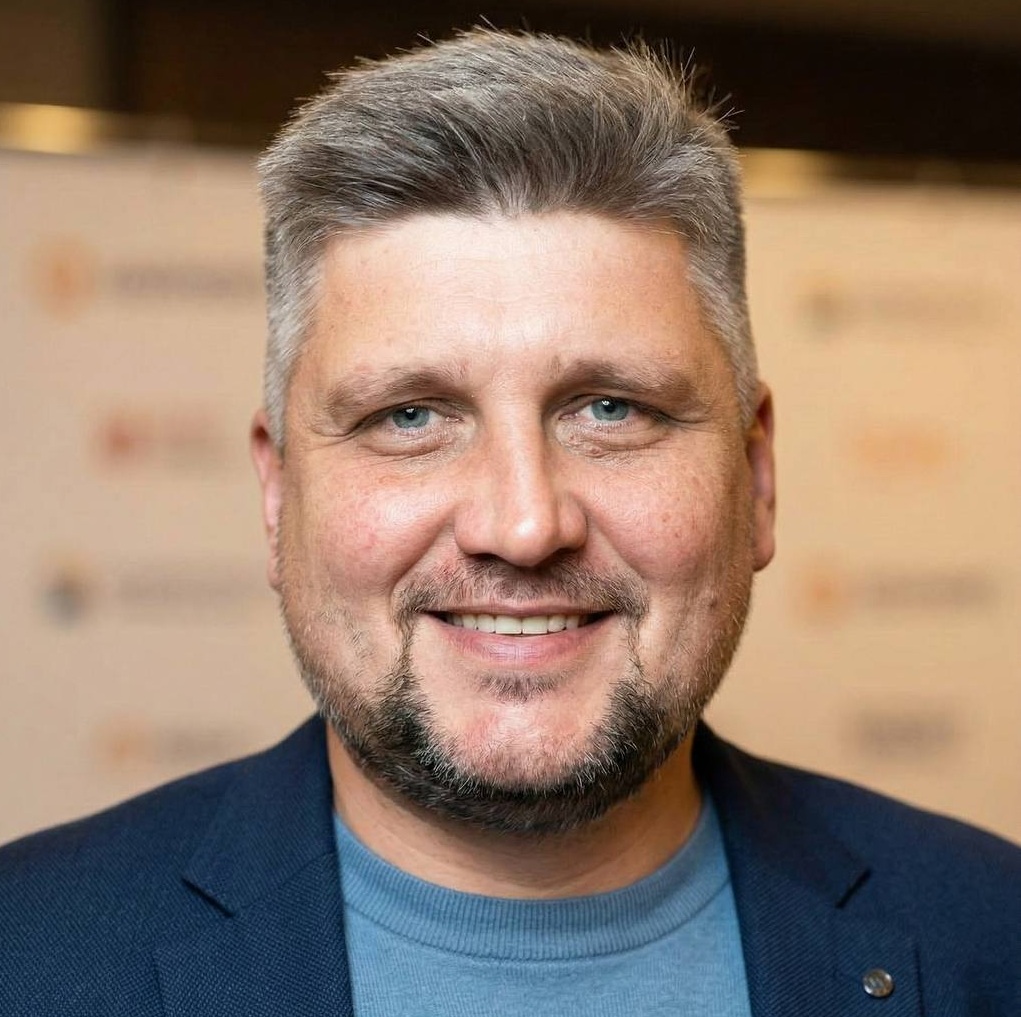
Percona
Yevhen Patlan is a technology leader with nearly 20 years of experience in build and release engineering. He has a strong record of building release processes and leading high-performing teams across cloud platforms. He works hands-on with Perl, Python, Bash, Docker, and Debian and RPM packaging, and he consistently delivers reliable, high-quality software releases. He loves open source and contributes to it.
MySQL is excellent at transactions but struggles with analytics: a wide GROUP BY over hundreds of millions of rows can take minutes or hours on InnoDB. The usual fix is to copy the data into a separate column store, which means running two systems and a pipeline between them. This talk explores a different path: embedding DuckDB, the in-process columnar engine, directly into MySQL. We will map the current landscape, from DuckDB querying MySQL from the outside and binlog-based CDC with dbtrail, to VillageSQL's extension and the storage engines in AliSQL and MariaDB. Then we will dive into Percona's experimental DuckDB engine for MySQL 9.7: how a query pushdown hook works, how results stay identical to InnoDB, and what TPC-H showed at 500 GB. We will also cover replicating from InnoDB into DuckDB, and a subtle two-phase commit bug that made a replica silently lose data.
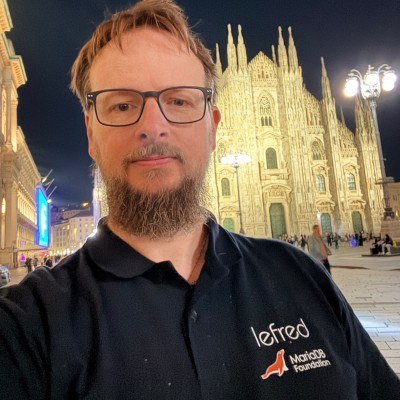
Open Source Evangelist & Community Advocate, MariaDB Foundation
"@lefred" has been consulting on Open Source and MySQL for over 20 years. After graduating in Management Information Technology, Frédéric started his career as a developer for an ERP under HP-UX, then chose a career in the open-source world by joining one of the first Belgian start-ups dedicated 100% to free projects around GNU/Linux. In 2011, lefred joined Percona, one of the leading MySQL-based specialists, and in 2016 became part of the MySQL Community Team as MySQL Community Manager for EMEA & APAC. In 2026, lefred moved to a more open-source fork - MariaDB - and joined the MariaDB Foundation. Frédéric is also a regular speaker at open-source conferences. His blog, mostly dedicated to open-source databases, is lefred.be.
Beyond work: Fred is the devoted father of three adorable daughters - Wilhelmine, Héloïse & Barbara.
MariaDB Server is often described simply as a familiar, open-source relational database. But behind that familiarity is a long history of database innovation - often introducing capabilities years before they became widely available elsewhere. In this session, we will explore some of the features that make MariaDB Server distinctive. Through practical SQL examples and live demonstrations, we will examine dynamic columns for semi-structured data, selective and multi-source replication, sequence objects, enforced CHECK constraints, flashback recovery, invisible columns, system-versioned tables, and application-time periods. Rather than presenting a list of release notes, the session connects each feature to the real operational or application-development problem it was designed to solve. Attendees will see how MariaDB can simplify data modelling, improve replication architectures, recover from accidental data changes, preserve historical information, and evolve database schemas without disrupting existing applications. The goal is to help developers, database administrators, and architects discover useful capabilities that may already be available in MariaDB Server - but are frequently overlooked.

Solution Architect, Amazon Web Services (AWS)
Sergii Shchaslyvyi is a Solution Architect at Amazon Web Services (AWS) with 10 years of experience, specializing in the migration and modernization of large-scale IT infrastructure for enterprise clients.
Education: Master's degrees in Telecommunication Networks from the National Technical University of Ukraine "Igor Sikorsky Kyiv Polytechnic Institute" and in Distributed Systems Engineering from the Technical University of Dresden.
Virtualization licensing changes have opened a door that stayed shut for twenty years. Organizations are now rethinking a layer they never questioned - and many are choosing cloud and open source for the next one. This session maps the migration options and shows where open technologies fit best.

Senior Engineer, MySQL Team, Percona
Oleksiy Lukin is a Senior Engineer on the MySQL team at Percona, with over three decades of experience spanning C/C++ and Java development, cryptography, and Unix/Linux systems programming. For more than 20 years he was a senior lecturer and researcher at Chernihiv Polytechnic National University (the conference's host institution, under its earlier names), and since 2009 he has served as secretary and deputy organizer of this very conference.
Highlights: 20+ years of Java development · 25+ years of C/C++ and Unix/TCP-IP experience · 15+ years in cryptography · deputy conference organizer since 2009.
The Key Management Interoperability Protocol (KMIP) provides a standardized interface between applications and key management systems (KMS). This talk presents kmipclient, an open-source native C++ KMIP client library developed at Percona, together with kmipcore, the underlying KMIP protocol library. The project was motivated by the practical difficulty of extending an existing C-based implementation through a separate C++ wrapper. The new architecture separates the KMIP protocol model from networking and client functionality, making the protocol implementation independently testable and easier to extend. The library supports KMIP 1.4 and 2.0, including protocol negotiation, and is tested against five independent KMIP server implementations. It is already used by Percona Server for MySQL while remaining a general-purpose KMIP client library. The talk also covers AI-assisted development with human-controlled architecture and review.

Lead Database Engineer, Readyset · Oracle ACE Director
Vinicius Grippa is a Lead Database Engineer at Readyset and an Oracle ACE Director with over 20 years of experience in the database ecosystem. Co-author of Learning MySQL, 2nd Edition, he specializes in architecting and optimizing mission-critical MySQL and MongoDB environments on Linux. Previously, Vinicius spent 8 years at Percona as a Lead Senior Database Engineer, where he spearheaded global initiatives to solve complex performance and scalability challenges.
Recent achievements: Co-author, Learning MySQL, 2nd Edition. Leads the MySQL User Group in Brazil. Regular speaker at FOSDEM, Percona Live, and OpenInfra Summit. B.S. in Computer Science, University of São Paulo (USP).
Brendan Gregg developed flame graphs, which provide a powerful way to visualize hierarchical data. Later on, Tanel Poder introduced the same concept for Oracle queries. This time, I'm bringing this idea for the first time as an open-source project to MySQL. By using the JSON output of the MySQL optimizer, we can expose the query's internal tree structure: nested-loop joins, temporary table creation, and sorting costs. Moving from traditional tabular EXPLAIN to this programmatically consumable format enables much deeper analysis of query behavior. We will explore the formats that myflames can generate for query profiling, such as flame graphs, treemaps, bar graphs, and the Visual Explain-style diagram familiar to MySQL Workbench users, and when each is most useful. The session focuses on the logic needed to consume MySQL execution metadata and shows how these visualizations help diagnose complex query behavior that is often hidden in standard EXPLAIN output. Attendees will see how raw execution-plan data is transformed into actionable visual insights, making it easier to interpret and optimize mission-critical queries.
We invite students, PhD candidates, early-career researchers, faculty and practitioners to submit theses for Day 2. Submissions are peer-reviewed by the Program Committee.
Review results and presentation format will be emailed to authors.
Theses are submitted through the unified registration form below - just answer "Yes" to "Are you submitting a thesis?" and attach your file.
Technical issues with the form? Write to the Organizing Committee:
One form for both attendees and speakers. The conference is fully online - the connection link will be sent to the email you provide, closer to the event.
Open the formThe conference is online: speakers share their own screen, so any presentation format will do. FOSS project demos are welcome.
One form for both attendees and speakers. The conference is fully online - the connection link will be sent to the email you provide, closer to the event.






WIN-WIN EDIH - Grant Agreement No. 101191647
EN: Co-Funded by the European Union. Views and opinions expressed are however those of the author(s) only and do not necessarily reflect those of the European Union or European Commission or Directorate-General for Communications Networks, Content and Technology. Neither the European Union nor the granting authority can be held responsible for them. WIN-WIN EDIH project received funding under the Digital Europe Program under grant agreement No. 101191647.
UA: Співфінансовано Європейським Союзом. Висловлені погляди та думки належать виключно автору(ам) і не обов'язково відображають позицію Європейського Союзу чи Європейської Комісії або Генерального директорату з мереж зв'язку, контенту та технологій. Ні Європейський Союз, ні орган, що надав грант, не несуть відповідальності за них. Проєкт WIN-WIN EDIH отримав фінансування в рамках програми Digital Europe відповідно до грантової угоди № 101191647.
Write to us: [email protected]
For press & partnerships - add [PARTNERSHIP] in the email subject.